Propulsion
Motor design / manufacturing / test
Motor design, manufacture, and static-fire testing for both stages of the solid-fuel vehicle, coordinated with structures, systems, safety, and launch operations.
UCF AIAA + SEDS / Seagate Space
One hundred kilometers is the internationally recognized boundary of space. Project Neptune is developing a rocket to reach that altitude from an offshore launch platform and to recover the vehicle after flight.
Platform: Seagate Space Gateway-S
Overview
Project Neptune is the joint engineering program of AIAA and SEDS, the two aerospace organizations at UCF, developed with technical guidance from Seagate Space, UCF faculty, and other sponsors.
An offshore platform brings challenges a fixed range does not: ocean environmental exposure and a moving deck. It also offers advantages, including flexibility in launch azimuth and a downrange clear of populated areas. The work builds direct experience with the sea-launch operations Seagate Space is developing on its own platforms.
Design work began in August 2026. The first test vehicle flies in May 2027, off the coast of St. Petersburg, Florida. Its flight informs the final design of the two-stage, solid-fuel vehicle scheduled to launch in May 2028.
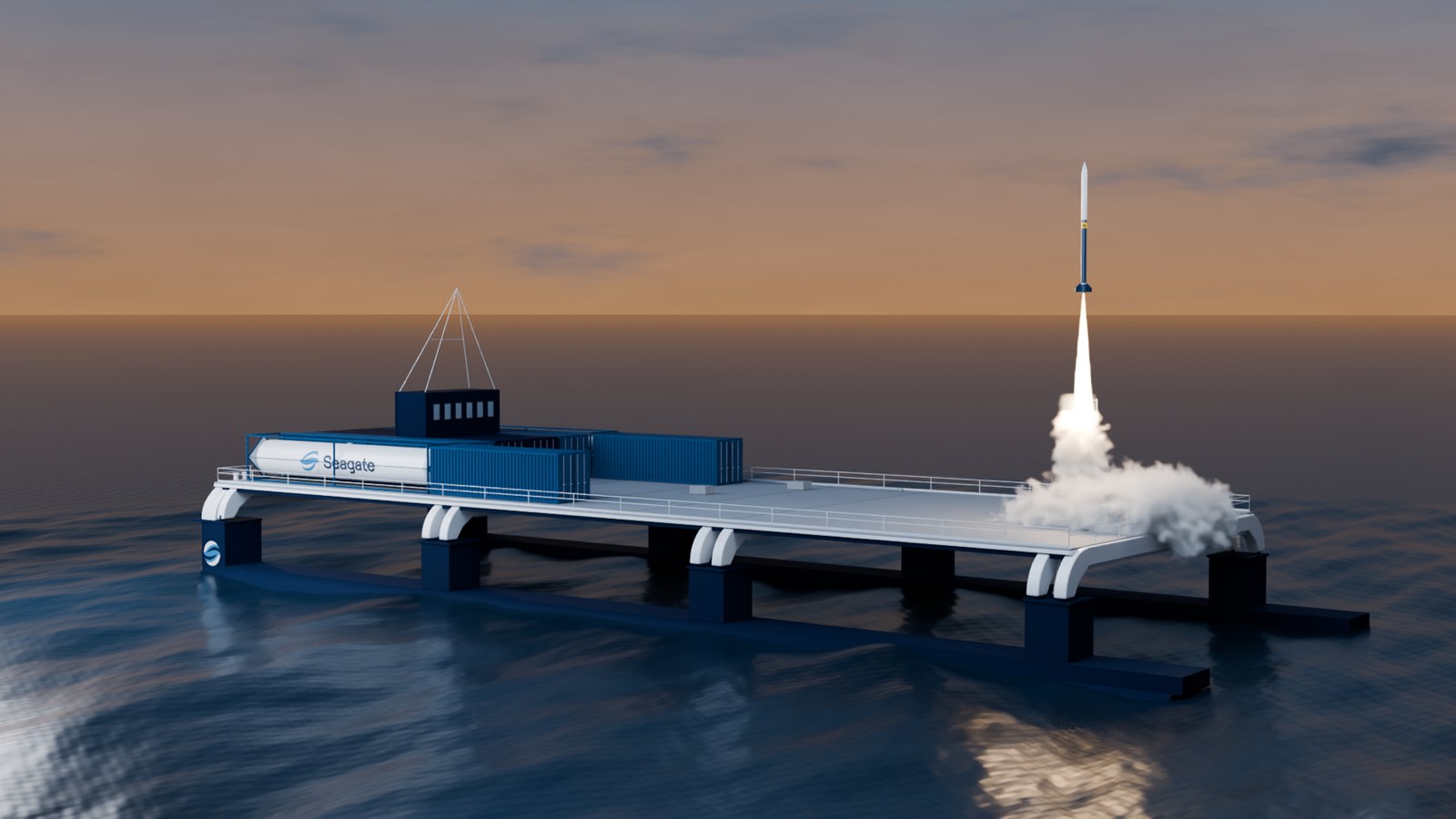
Platform: Seagate Space Gateway-S
Schedule
From initial planning through two launch campaigns, with a test flight to validate the design before the final vehicle is built.
Phase 01 of 08
Establish system requirements, define mass and performance budgets, and assign subteam ownership. Vehicle sizing, staging, and motor selection are worked in this phase and frozen at the preliminary design review.
Subteams
Each subteam owns a part of the vehicle and works under the Management Committee.
E-board leadership from AIAA and SEDS actively working on the program. The committee makes the managerial and executive decisions: selecting subteam leads, financial decisions, and outreach. Marketing and any further committees sit under it.
Motor design / manufacturing / test
Motor design, manufacture, and static-fire testing for both stages of the solid-fuel vehicle, coordinated with structures, systems, safety, and launch operations.
Airframe / structures / fabrication
Airframe design for both stages, structural analysis and load cases, material selection, and fabrication of the primary structure.
Parachutes / flotation / water recovery
Parachute sizing and deployment, flotation, and the recovery test program that qualifies the vehicle for salt-water retrieval.
Avionics / telemetry / ground support
Flight avionics, telemetry and radio links, ground support equipment, data acquisition, and the event timing that has to fire on schedule for staging and recovery.
Requirements / budgets / design reviews
Vehicle-level requirements, mass and power budgets, risk management, and design review readiness across the program.
Verification / validation / assembly
Integration procedures for the assembled vehicle, verification and validation against requirements, and the test campaign that measures performance against the analytical models.
Procurement / inventory / sponsorship
Procurement, inventory control, budget tracking, transportation, lodging, and sponsor coordination across the program.
Media
Renders, test footage, and build documentation from across the program.
No media published yet. Renders, photographs, and flight footage will be posted here as the program produces them, each dated, and announced on the updates page.
Membership
Membership in AIAA or SEDS as UCF students is required to join the team.
Project Neptune is open to students from any major. You will work on and learn machining, electronics, software, structural analysis, technical writing, 3D modeling, media production, and supplier coordination.
Alumni are welcome in the Discord to follow the program.

Sponsorship
Program partners

Seagate Space provides the Gateway-S offshore launch platform and technical guidance on sea-launch operations.
Monster Energy is partnered with the program.
Materials, test hardware, transportation, lodging, and launch operations. These contributions determine how much the team can test before flight.
Machining, fabrication, electronics, software, facilities, or shipping. Donated capability is worth as much to the program as direct funding.
Sit in on a design review, mentor a subteam, or open up qualified equipment and personnel.
Sponsorship is coordinated through the two organizations. Contact either to begin a conversation.
Contact
Sponsorship, media, partnership, or general questions all go to either organization. Copy the other address so both boards see the conversation.
Program partner / Gateway-S launch platform